Long-haul flights can be one of the most exhausting parts of travelling, especially when you’re sitting in economy for eight, ten, or even twelve hours at a time. However, with the right preparation and a few thoughtful adjustments, long flights can actually become surprisingly comfortable and even enjoyable. The key is understanding how to manage your environment, your body, and your routine while in the air.
Whether you’re flying overnight to Asia, heading to the United States, or embarking on a dream destination across the world, preparing properly for a long flight can dramatically improve how you feel when you arrive. Instead of stepping off the plane feeling drained and jet-lagged, you can land feeling refreshed and ready to enjoy your destination. These practical tips will help transform long-haul flights into a far more comfortable and relaxed experience.
1. Choose your seat strategically
One of the most important decisions for a comfortable long-haul flight actually happens before you even arrive at the airport. Choosing the right seat can make a huge difference to your overall comfort level throughout the journey. While every traveller has their own preferences, there are some clear advantages to certain seats depending on how you like to travel.
Window seats are ideal for travellers who want to sleep or enjoy uninterrupted rest during the flight. You can lean against the wall of the aircraft and avoid being disturbed by other passengers needing to get up. On the other hand, aisle seats provide easier access to the aisle so you can stretch your legs, walk around the cabin, and visit the restroom without needing to wake other passengers. If comfort is your priority, it’s worth checking seat maps before booking to avoid seats near bathrooms or galleys where noise and movement can be frequent.
2. Bring a proper neck pillow and sleep support
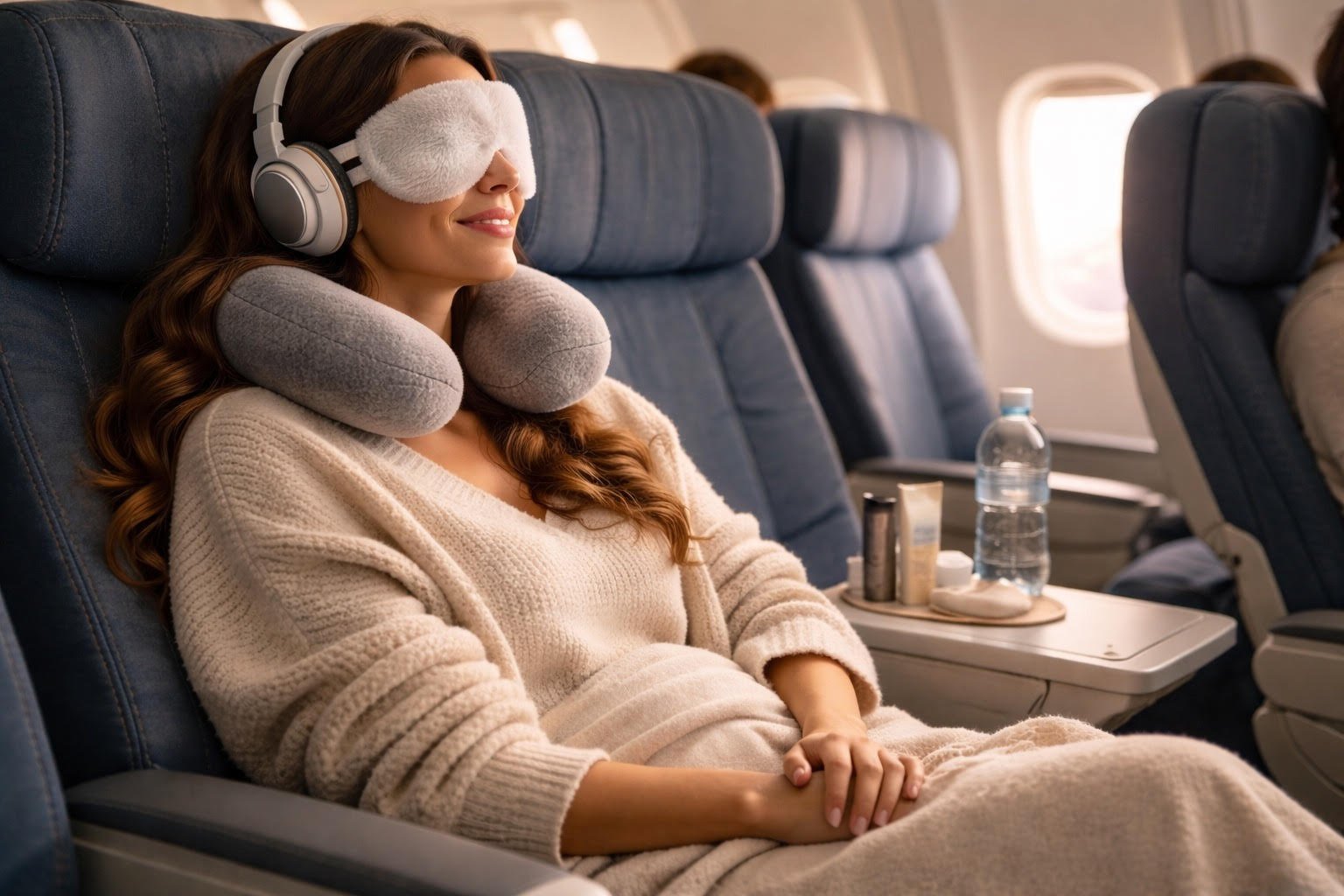
Sleeping on a plane can be challenging, particularly in economy where space is limited. A high-quality neck pillow can make a dramatic difference by supporting your head and preventing the uncomfortable “head drop” that often wakes people during flights. Without proper support, your neck muscles remain tense throughout the journey, which can lead to stiffness and discomfort when you land.
Many experienced travellers also bring small additional items such as an eye mask, earplugs, or noise-cancelling headphones to create a calmer environment for sleep. These simple additions block out cabin lights and background noise, helping your brain relax and drift into deeper rest. Creating a small sleep routine on board, such as dimming your screen and putting on relaxing music, can also signal to your body that it is time to rest.
3. Dress comfortably and layer your clothing
Comfortable clothing is essential for long flights. Tight or restrictive outfits may look stylish in the airport, but they quickly become uncomfortable after several hours of sitting. Choosing loose-fitting, breathable clothing allows your body to relax and helps maintain healthy circulation during the flight.
Cabin temperatures can vary significantly throughout a long journey, so layering your clothing is a smart approach. A lightweight hoodie, scarf, or cardigan can help you stay warm when the cabin temperature drops. Comfortable socks are also important, as they help keep your feet warm and can reduce swelling that sometimes occurs during long flights.
4. Stay hydrated throughout the flight
Airplane cabins have extremely low humidity levels, which can cause dehydration far more quickly than many travellers realise. Dry skin, fatigue, headaches, and increased jet lag are often the result of not drinking enough water during long flights. One of the simplest ways to stay comfortable is to make hydration a priority from the moment you board the aircraft.
Drinking water regularly throughout the flight helps maintain your energy levels and keeps your body functioning properly. Many travellers also choose to limit alcohol and caffeine intake while flying, as both can contribute to dehydration. Carrying a reusable water bottle that you can refill after security can also make it easier to drink consistently during the journey.
5. Move and stretch regularly
Sitting in the same position for many hours can cause stiffness, discomfort, and reduced circulation. This is why it is important to move your body periodically during long-haul flights. Even small movements such as stretching your legs, rolling your shoulders, or walking down the aisle every couple of hours can make a noticeable difference.
Some airlines also provide simple in-seat exercises that can help improve circulation and reduce muscle tension. These movements encourage blood flow and can help prevent the feeling of heaviness or fatigue that many travellers experience after extended periods of sitting.
6. Pack a small comfort kit in your carry-on
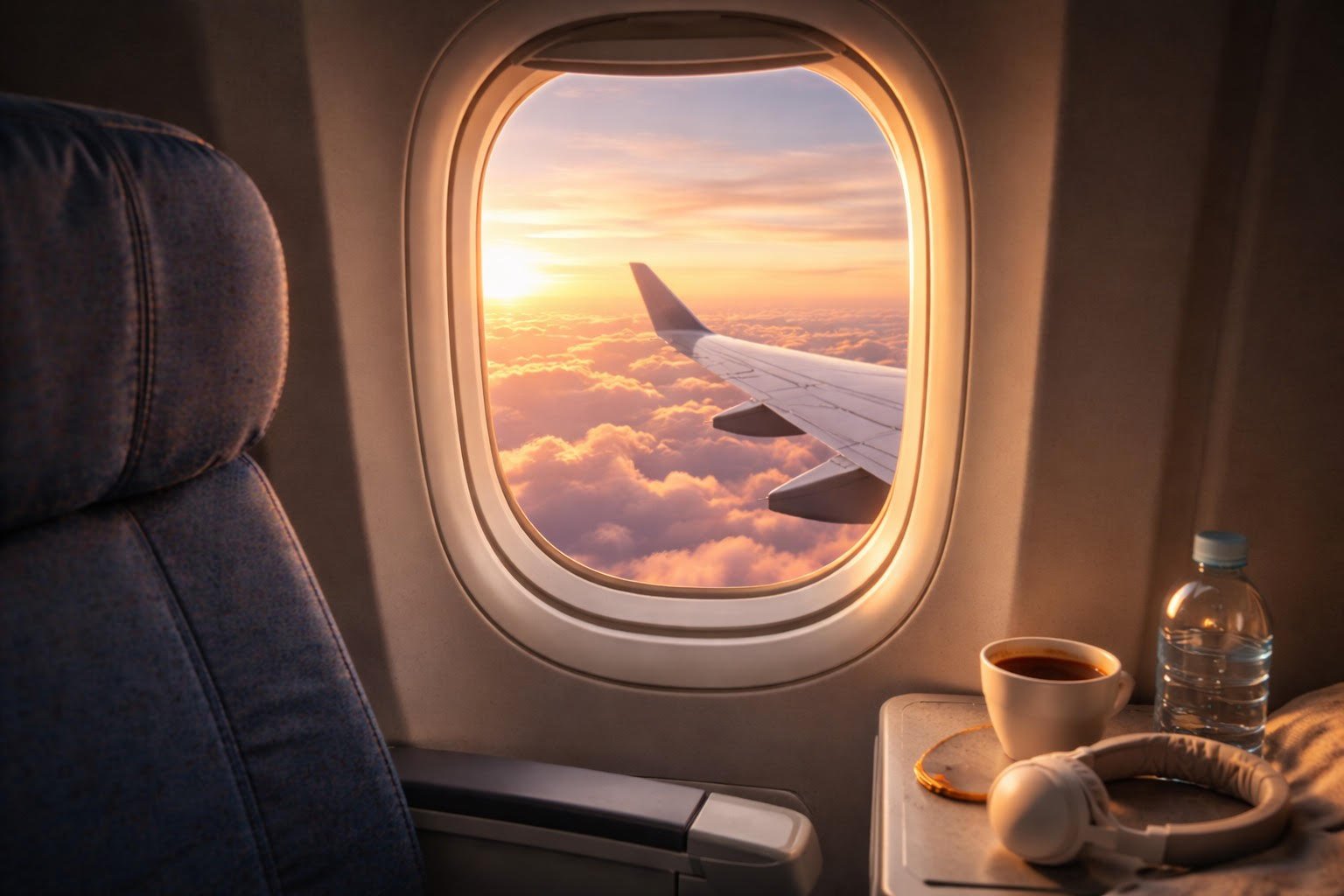
A small personal comfort kit can make your flight far more enjoyable. Instead of searching through your carry-on repeatedly, keeping essential items together in a small pouch allows you to easily access what you need during the journey. Items such as lip balm, moisturiser, hand sanitiser, facial mist, and a travel toothbrush can help you feel refreshed even during very long flights.
Many frequent travellers also include compression socks, a small blanket, or slippers in their carry-on to increase comfort during overnight journeys. These simple items can transform the cabin environment into a more relaxed and comfortable space.
7. Manage your screen time and entertainment
While in-flight entertainment systems offer a wide selection of movies and shows, it is still helpful to prepare additional entertainment options before boarding. Downloading films, podcasts, or music playlists onto your phone or tablet ensures you always have something to watch or listen to, even if the aircraft’s system has limited options.
Balancing entertainment with periods of rest can also help the flight feel shorter. Many travellers find that alternating between watching a film, reading a book, and resting their eyes makes the hours pass much more quickly than staying glued to a screen for the entire journey.
8. Adjust your sleep schedule before departure
If your flight crosses several time zones, adjusting your sleep schedule slightly before departure can help reduce jet lag when you arrive. For example, if you’re travelling east, going to bed earlier for a few days before the trip can help your body gradually adapt to the new time zone.
During the flight, try aligning your sleep with the time at your destination. If it is nighttime at your arrival location, sleeping on the plane can help your body transition more smoothly once you land.
9. Eat light meals during the flight
Heavy meals can sometimes leave travellers feeling sluggish or uncomfortable during long flights. Choosing lighter meals and balanced snacks can help maintain energy levels and support digestion while travelling. Foods that are easy to digest, such as fruit, yoghurt, or light sandwiches, can be much more comfortable than heavier meals.
Many travellers also bring their own snacks to ensure they have healthy options available during the journey. Nuts, protein bars, and fresh fruit are all excellent choices that provide energy without leaving you feeling overly full.
10. Create a calm personal space
Although airplane cabins are shared spaces, creating a small personal comfort zone can make the experience feel much more relaxing. Adjusting your seat area, using a travel pillow, putting on headphones, and dimming your screen can help create a calm environment that feels more private.
Simple rituals such as listening to relaxing music, reading a book, or enjoying a warm drink can also help shift your mindset from “enduring the flight” to simply enjoying the journey. When you take the time to create a comfortable space, long-haul travel becomes far less stressful and much more enjoyable.
Planning a long-haul trip?
If you’re preparing for a long journey and want your travel experience to feel effortless from start to finish, we design curated itineraries with carefully selected stays, experiences, and seamless travel planning.